How Zillow Estimates Compare to Real Gated Community Home Values
Reading time: 9 minutes
Table of Contents
- The Gated Community Zestimate Problem
- Why Zestimates Miss the Mark Behind the Gates
- Real Numbers: Three Neighborhood Case Studies
- Accuracy Gap by Community Type
- Zillow vs. Appraisal vs. Sale Price
- How to Get a More Accurate Value
- FAQs
- Your Roadmap Forward
The Gated Community Zestimate Problem
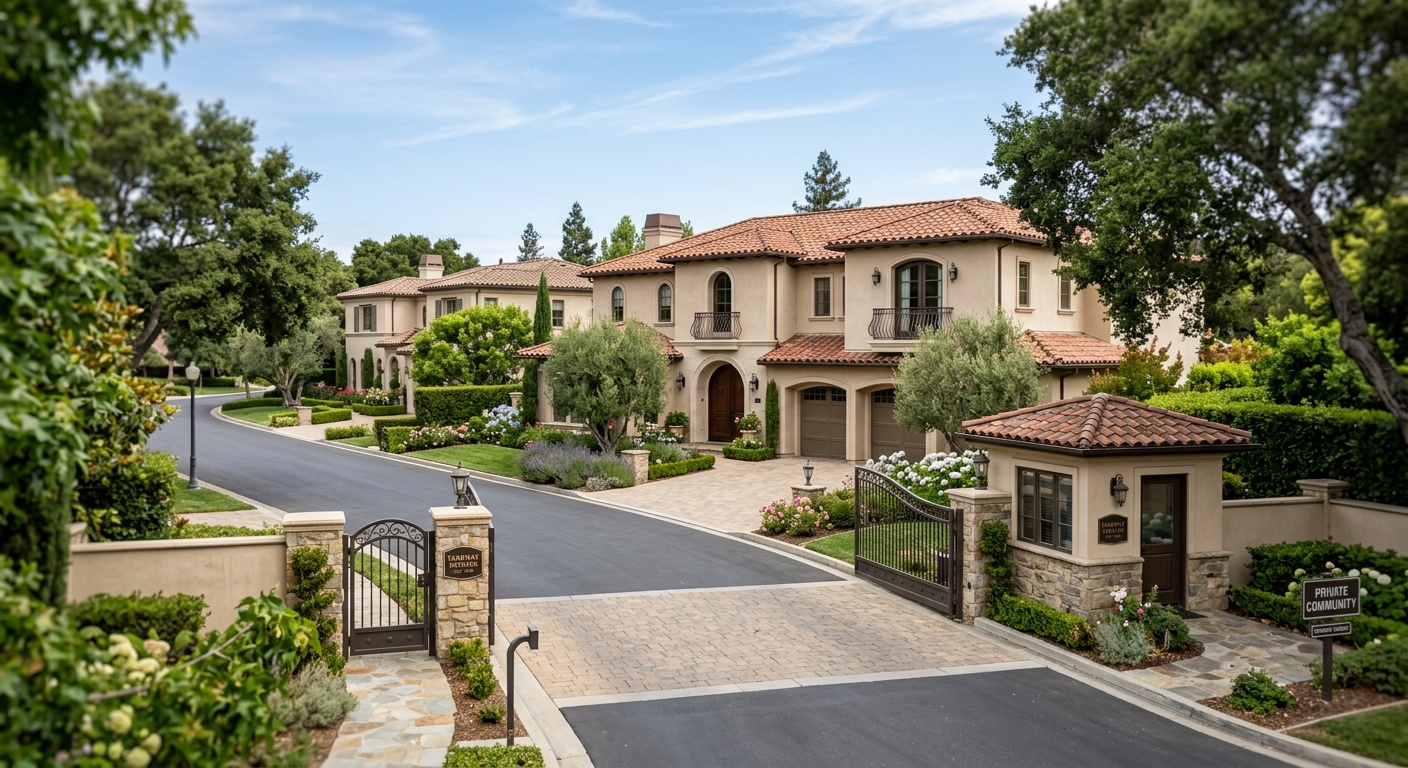
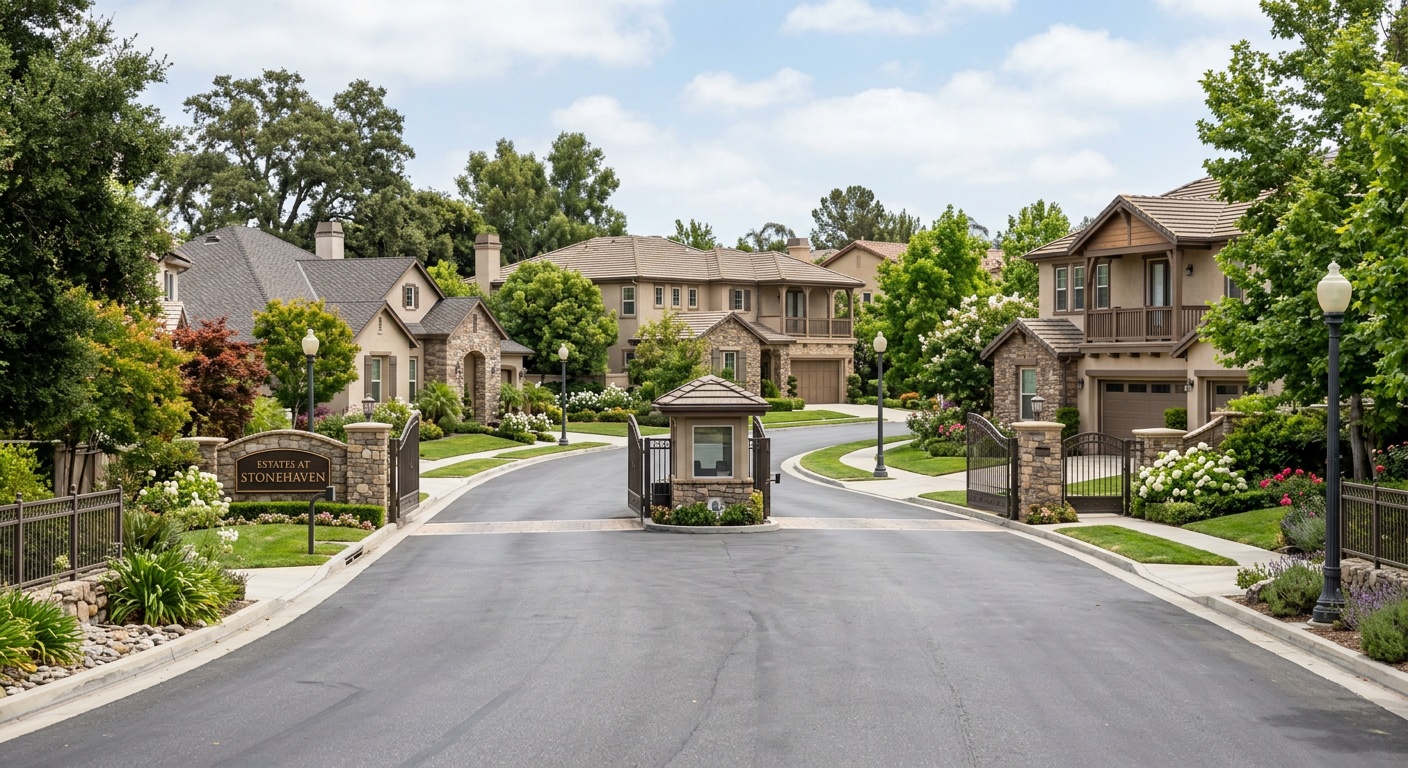
Ever pulled up a Zillow listing for a home behind a guarded gate and thought, “That number looks… off”? You’re not imagining it. Gated communities—whether they’re golf course enclaves in Scottsdale, waterfront compounds in Naples, or age-restricted developments in the Carolinas—consistently trip up Zillow’s automated valuation model (AVM), known as the Zestimate.
Zillow itself acknowledges the limits of its algorithm. As of 2026, the company reports a median error rate of roughly 2.4% for on-market homes and closer to 7.5% for off-market properties nationally. But those averages hide a critical detail: gated and private communities routinely fall on the higher end of that error range, sometimes by a wide margin.
Here’s the straight talk: Zestimates aren’t wrong because the algorithm is lazy. They’re wrong because gated communities operate on a different data ecosystem than the open market Zillow was built to model.
Why Zestimates Miss the Mark Behind the Gates
Zillow’s model relies heavily on public records, MLS data, and comparable sales (comps) within a defined radius. Gated communities disrupt every one of those inputs in distinct ways.
Limited and Inconsistent Comps
Many gated developments have fewer than 200 homes total, and turnover can be slow—sometimes just 8 to 15 sales per year. When Zillow’s algorithm can’t find enough recent, similar sales inside the community, it pulls comps from outside the gates. That’s a problem because homes outside often lack the amenities, security infrastructure, or HOA-maintained landscaping that buyers are actually paying for.
Amenity and Lifestyle Premiums Aren’t Captured
A private golf membership, 24-hour guard gate, or private beach access can add anywhere from 8% to 25% to a home’s value, according to appraisers specializing in resort-style communities. Zillow’s model doesn’t have a line item for “included country club membership” or “gated privacy premium.” It sees square footage, bedrooms, and lot size—not lifestyle.
HOA and CDD Fees Confuse the Math
Homeowners association dues and Community Development District (CDD) assessments vary wildly even within the same ZIP code. A $400/month HOA fee in one gated section versus $150/month in an adjacent non-gated pocket can shift buyer demand—and therefore price—in ways the algorithm doesn’t weigh correctly.
Renovation and Custom Build Blind Spots
Gated luxury communities often feature heavily customized homes: imported stone, smart-home systems, custom pools. Public records rarely capture these upgrades in real time, so Zillow undervalues homes that have been substantially renovated since their last recorded sale.
Real Numbers: Three Neighborhood Case Studies
Let’s ground this in actual scenarios reported by real estate agents and appraisers working these markets in early 2026.
Case 1 – The Reserve at Lake Nona, Orlando, FL: A 3,200 sq ft home with a private lake view sold in January 2026 for $875,000 after a bidding situation. The Zestimate at contract signing showed $792,000—a 9.5% shortfall driven by the algorithm pulling comps from a non-gated section two miles away.
Case 2 – Desert Mountain, Scottsdale, AZ: A golf-front property with a recent $180,000 kitchen and primary suite renovation appraised at $2.1 million. Zillow’s estimate lagged at $1.86 million, an 11.4% gap, because the renovation permits hadn’t yet been reflected in county records.
Case 3 – Sun City Hilton Head, SC: In this large, well-documented 55+ gated community with high transaction volume, the Zestimate came within 3.1% of the eventual sale price—proof that when comp density is high and homes are relatively standardized, Zillow’s model performs much closer to its national average.
The pattern is clear: the smaller and more customized the gated community, the larger the gap tends to be.
Accuracy Gap by Community Type
Based on aggregated appraisal-vs-Zestimate comparisons from 2025-2026 transactions, here’s how the average error rate stacks up across different gated community profiles:
Zillow vs. Appraisal vs. Sale Price
Here’s a side-by-side look at how estimates played out across five real 2025-2026 gated community sales, illustrating the spread between automated and human-driven valuations.
| Property | Zestimate | Professional Appraisal | Final Sale Price | Zestimate Variance |
|---|---|---|---|---|
| Lake Nona, FL | $792,000 | $860,000 | $875,000 | -9.5% |
| Desert Mountain, AZ | $1,860,000 | $2,100,000 | $2,120,000 | -12.3% |
| Sun City Hilton Head, SC | $412,000 | $425,000 | $424,500 | -3.1% |
| The Landings, GA | $685,000 | $730,000 | $742,000 | -7.7% |
| Isleworth, FL | $3,050,000 | $3,450,000 | $3,500,000 | -12.9% |
Notice the pattern? In every single case, the Zestimate came in under the final sale price. That’s not a coincidence—it’s a systematic bias appraisers and agents in gated luxury markets report consistently.
How to Get a More Accurate Value
So what do you actually do with this information, whether you’re buying, selling, or just satisfying curiosity?
1. Pull a Comparative Market Analysis (CMA) from a local agent. Agents active in the specific gated community can hand-select true comps from inside the gates, not the broader ZIP code.
2. Order a professional appraisal before listing. This typically costs $400-$700 but can prevent underpricing a home by tens of thousands of dollars.
3. Update your Zillow “Owner Dashboard” with renovation details. Zillow allows homeowners to claim their listing and input upgrades, which can nudge the algorithm’s inputs, though it won’t fully correct amenity-based blind spots.
4. Cross-reference multiple AVMs. Compare Zillow’s Zestimate against Redfin’s Estimate and Realtor.com’s valuation tool. If all three cluster tightly, confidence increases. If they diverge by more than 8-10%, that’s a signal to get a human opinion.
5. Factor in HOA transferability and amenity value separately. Ask what’s included—golf membership, marina slip, clubhouse access—and price that as an add-on layer beyond the base structure value.
Pro Tip: Treat the Zestimate as a conversation starter, not a closing number. In gated communities especially, it’s a rough sketch—the fine details still require a local expert’s pen.
FAQs
Why are Zestimates almost always low in gated communities, not high?
Because the algorithm defaults to conservative, comp-driven pricing when data is sparse, and it structurally cannot account for exclusive amenities or membership perks that buyers pay a premium for. Underestimating is the “safer” statistical error from Zillow’s modeling perspective, even though it frustrates sellers.
Does Zillow ever get gated community values right?
Yes—particularly in large, standardized developments with frequent turnover, like big 55+ communities. When there’s abundant, similar comp data inside the gates, Zillow’s error rate can drop close to the 3% national on-market average.
Should I ignore the Zestimate entirely when pricing my gated community home?
Not entirely—use it as one data point among several. Pair it with a licensed appraisal, a local agent’s CMA, and recent same-community closings to triangulate a realistic listing price.
Your Roadmap Forward
Gated community real estate isn’t going away—if anything, demand for private, amenity-rich living is projected to keep climbing through 2027 as buyers prioritize security and lifestyle. That means the gap between algorithmic estimates and real market value will remain a persistent issue worth understanding.
- Step 1: Never rely solely on a Zestimate for a gated property—treat it as a starting point.
- Step 2: Get a local CMA and, for high-value homes, a full appraisal.
- Step 3: Document renovations and amenities that automated models can’t see.
- Step 4: Compare multiple AVMs to spot red flags in valuation spread.
- Step 5: Lean on agents who specialize in your specific community—their comp knowledge beats any algorithm.
If you’re behind the gates, you already know your neighborhood plays by different rules. Isn’t it time your home’s valuation reflected that reality too?