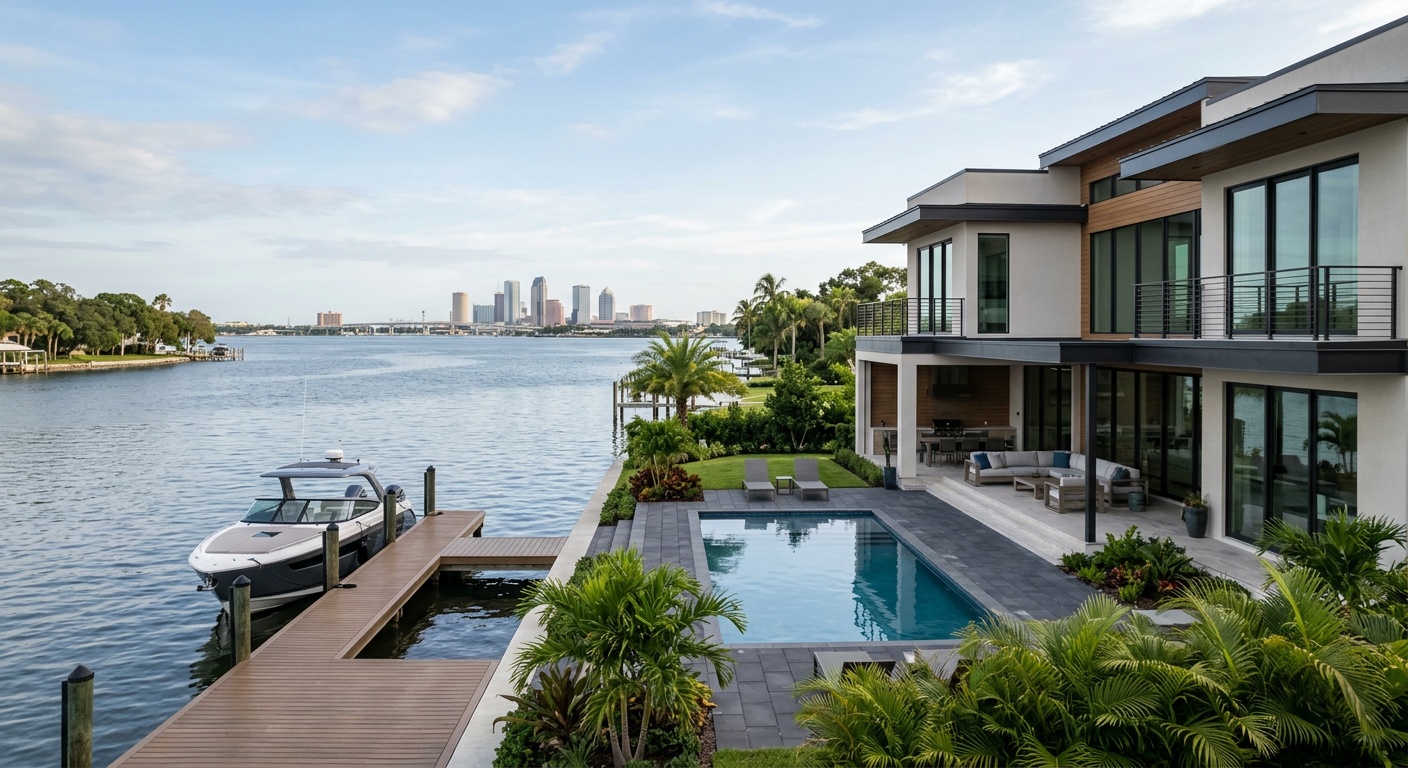
Foreign Buyer’s Guide to Purchasing a Home in the Tampa Area (2026 Edition)
Reading time: 9 minutes
Buying property in a foreign country can feel like assembling furniture without instructions—technically possible, but frustrating without guidance. If you’re an international buyer eyeing Tampa Bay’s sun-soaked neighborhoods, this guide translates the confusing parts into a clear path forward.
Table of Contents
- Why Tampa Attracts International Buyers in 2026
- Legal Groundwork Before You Shop
- Financing Options for Non-Resident Buyers
- The Purchase Process, Step by Step
- Tax Considerations You Can’t Ignore
- Common Challenges and How to Solve Them
- FAQs
- Your Roadmap Forward
Why Tampa Attracts International Buyers in 2026
Tampa’s population growth, lack of state income tax, and relatively affordable coastal lifestyle continue drawing buyers from Canada, the UK, Latin America, and increasingly India and Germany. According to the National Association of Realtors’ 2026 International Transactions report, Florida remains the top destination for foreign buyers, capturing roughly 21% of all international residential purchases nationwide—and Tampa-St. Petersburg ranks among the top five metro areas within the state.
Here’s the straight talk: Tampa isn’t just popular because of beaches. It’s popular because it offers a rare combination—relatively lower entry prices compared to Miami, strong rental demand from a growing professional workforce, and direct international flight connections through Tampa International Airport, which added new European routes in early 2026.
What’s Different in 2026 Compared to Previous Years
Interest rates have stabilized somewhat, hovering around 6.1%-6.4% for conventional loans, but foreign national loan products typically run 1-2 points higher. Inventory has also loosened slightly compared to the tight 2022-2023 market, giving buyers more negotiating room, especially on properties listed over 60 days.
Legal Groundwork Before You Shop
Quick scenario: Imagine you’ve found the perfect condo in Westshore, but you don’t yet have a U.S. tax ID or a local bank account. Can you still buy? Yes—but preparation matters enormously.
- Obtain an ITIN (Individual Taxpayer Identification Number) if you don’t have a Social Security Number. This is required for tax filings related to rental income or eventual sale.
- Open a U.S. bank account ideally before house hunting. Some banks, like HSBC and Citibank, offer international banking packages tailored to foreign buyers.
- Hire a real estate attorney familiar with foreign transactions. Florida doesn’t require attorneys for closings, but for international buyers, it’s a safety net worth the cost.
- Understand FIRPTA (Foreign Investment in Real Property Tax Act)—this affects how much tax is withheld when you eventually sell.
Financing Options for Non-Resident Buyers
Many foreign buyers assume they must pay cash. That’s not always true, though cash purchases do simplify things considerably—roughly 44% of international buyers in Florida paid cash in 2025, per NAR data.
Foreign National Loan Programs
Several Tampa-area lenders and credit unions now offer “foreign national” mortgage programs. These typically require:
- 30-40% down payment (compared to 10-20% for U.S. citizens)
- Proof of income, often through international tax returns or bank statements
- A valid passport and visa (though visa status requirements vary by lender)
- Higher interest rates, often 1-2% above standard rates
Pro Tip: Work with a mortgage broker who specializes in foreign national loans rather than a single bank. Brokers can shop your profile across multiple lenders, some of which have more flexible underwriting than big-name banks.
The Purchase Process, Step by Step
Let’s walk through a realistic case. Maria, a buyer from São Paulo, wanted a two-bedroom condo near Bayshore Boulevard as a part-time residence and rental investment.
- Pre-approval or proof of funds — Maria secured a foreign national pre-approval letter before touring properties.
- Property search with a licensed agent — She worked with a Tampa-based agent who had closed deals with Brazilian clients before, smoothing out cultural and logistical friction.
- Offer and contract — Florida uses the “FAR/BAR” contract, which includes standard timelines for inspections and financing contingencies.
- Escrow deposit — Typically 5-10% of purchase price, held by a title company or attorney.
- Inspection period — Usually 10-15 days to identify issues and renegotiate if necessary.
- Closing — Can often be completed remotely via power of attorney, which Maria used since she couldn’t travel for the final signing.
Tax Considerations You Can’t Ignore
This is where many foreign buyers get blindsided. Property taxes in Hillsborough and Pinellas counties average around 0.9%-1.1% of assessed value annually, but that’s just the beginning.
| Cost Category | Typical Range (2026) | Applies To |
|---|---|---|
| Property Tax | 0.9% – 1.1% of value/year | All owners |
| FIRPTA Withholding (on sale) | 15% of gross sale price | Foreign sellers |
| Homeowners Insurance | $3,500 – $7,000/year | Coastal & inland properties |
| HOA/Condo Fees | $300 – $900/month | Condos & planned communities |
| Closing Costs | 2% – 5% of purchase price | All buyers |
Insurance Reality Check
Florida’s insurance market has been volatile. While rates stabilized slightly in 2026 after legislative reforms, coastal properties in areas like Davis Islands or South Tampa still carry premium costs significantly above the national average. Always get an insurance quote before finalizing an offer—it can change your monthly budget dramatically.
Common Challenges and How to Solve Them
Challenge 1: Currency Fluctuation Risk
A buyer converting Euros or British Pounds to USD can see their budget shift by thousands of dollars within weeks. Solution: Use a forward contract through a currency exchange specialist (like Wise or Moneycorp) to lock in a rate before closing.
Challenge 2: Limited Credit History in the U.S.
Since most foreign buyers lack a U.S. credit score, traditional lenders often reject applications outright. Solution: Seek lenders offering “no-FICO” foreign national programs that instead evaluate international credit reports and bank statements.
Challenge 3: Remote Property Management
If you’re not living in Tampa year-round, maintaining the property becomes tricky. Solution: Hire a licensed property management company—typical fees run 8-12% of monthly rental income, but they handle tenant screening, maintenance, and compliance with local rental laws.
Comparing Financing Paths: A Quick Visual
Here’s a simplified comparison of how different buyer profiles typically finance their Tampa purchase, based on 2025-2026 transaction data:
FAQs
Do I need to be a U.S. citizen or resident to buy property in Tampa?
No. Foreign nationals can purchase real estate in Florida regardless of citizenship or visa status. There are no federal or state laws restricting foreign ownership of residential property, though financing options and tax obligations differ from those for U.S. citizens.
Can I get a mortgage without a U.S. credit score?
Yes. Several Tampa-area lenders offer foreign national loan programs that assess international credit history, income documentation, and larger down payments instead of a FICO score. Expect to provide bank statements, passport copies, and sometimes a reference letter from your home-country bank.
What happens with taxes when I eventually sell the property?
Under FIRPTA, the buyer (or their agent) is required to withhold 15% of the gross sale price and send it to the IRS, unless an exemption applies. You can later file a U.S. tax return to reconcile the actual capital gains owed, potentially recovering part of that withholding.
Your Roadmap Forward
Buying a home in Tampa as a foreign national isn’t about clearing every hurdle perfectly—it’s about sequencing your decisions wisely. Here’s your practical checklist to move forward:
- Step 1: Secure an ITIN and open a U.S. bank account before house hunting begins.
- Step 2: Get pre-approved with a foreign national loan specialist, or confirm your cash budget with currency hedging in place.
- Step 3: Partner with a Tampa-based agent and attorney experienced in international transactions.
- Step 4: Budget realistically for insurance and HOA costs—these vary widely by neighborhood and property type.
- Step 5: Plan your exit strategy early, including FIRPTA withholding, so a future sale doesn’t surprise you.
As Tampa’s market matures alongside broader shifts in global remote work and cross-border investment, foreign buyers are no longer a niche—they’re a growing pillar of the local housing economy. The question isn’t whether Tampa is worth considering; it’s whether you’re prepared to navigate the process with the right team beside you. So, what’s your next move—will you start with financing, or with finding the right local expert to guide you?